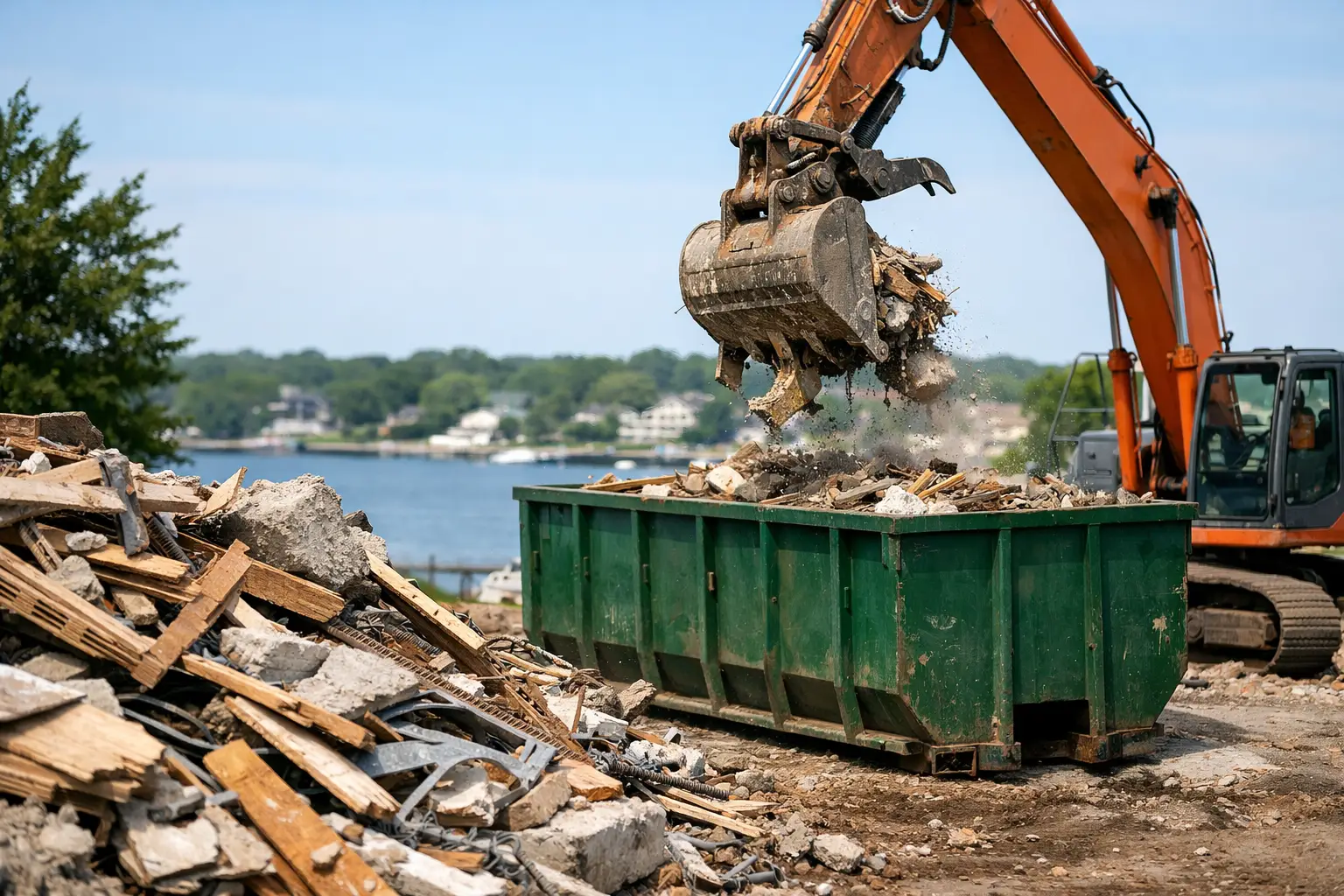
A bathroom tear-out or garage demolition can look manageable until the debris starts piling up. This demolition debris disposal guide helps Long Island homeowners, landlords, and property managers make a clear plan before broken drywall, lumber, fixtures, and heavy materials take over the property.
Demolition cleanup is not just about getting everything into a truck. Materials have different disposal rules, weight limits, safety risks, and recycling options. Sorting early protects your time, keeps the work area safer, and helps prevent an expensive second cleanup.
Start With a Debris Plan Before Demolition
Before swinging a hammer, identify what is coming out and where it will go. A small closet removal produces a very different load than a kitchen, deck, shed, or interior wall demolition. The size of the project determines whether a pickup load, junk removal crew, or roll-off dumpster makes the most sense.
Measure the space, estimate how many rooms or structures are being removed, and consider the material itself. Dense materials such as concrete, brick, tile, soil, and plaster fill a container quickly and add significant weight. Light materials, including drywall, insulation, carpet, wood trim, and packaging, take up a lot of volume even when they are not especially heavy.
Keep a clear path from the work area to the loading area. Remove vehicles, outdoor furniture, and anything that could be damaged by a wheelbarrow or carrying materials through the property. If debris will sit overnight, keep it away from doors, walkways, and drains.
Sort Demolition Debris as You Work
Mixing every material into one pile may feel faster during demolition, but it can make disposal harder. Separate materials when practical, especially if you expect to recycle, donate, or use a dumpster with restrictions.
A simple sorting system usually includes four groups:
- Clean wood, lumber, and untreated pallets
- Metal, including pipes, wiring, appliances, and fixtures
- Construction debris such as drywall, tile, flooring, and insulation
- Heavy masonry materials such as concrete, brick, stone, and asphalt
Keep cardboard, clean packaging, and usable fixtures separate as well. Doors, cabinets, sinks, light fixtures, and appliances may be reusable if they are in safe, working condition. Donation is not always realistic during a fast renovation, but separating reusable items can reduce what needs to be hauled away.
Do not assume every facility accepts mixed construction and demolition debris. Some disposal locations charge differently for clean concrete or metal, while others will not accept certain materials at all. When in doubt, ask before loading a truck or dumpster.
Watch for Materials That Need Special Handling
Some items should never go into a standard debris pile. Paint, solvents, propane tanks, automotive fluids, pesticides, batteries, and many electronics require separate handling. Refrigerators, air conditioners, dehumidifiers, and other cooling equipment may contain refrigerants that need proper recovery before disposal.
Older homes deserve extra caution. If a property was built before modern building-material rules, do not disturb suspected asbestos-containing materials or lead-painted surfaces without proper assessment. Old floor tile, pipe insulation, textured ceilings, certain siding products, and adhesive materials can create serious health risks when broken apart.
If you find unknown chemicals, mold-damaged material, animal waste, sharp medical items, or signs of fire damage, stop and assess the situation. A quick cleanup decision is not worth exposing workers, residents, or neighbors to a hazard.
Choose the Right Disposal Method
The best disposal option depends on the size, speed, and access needs of the job. It also depends on whether you want to do the loading yourself.
For a small, controlled project, hauling debris yourself may work. This is best for a limited amount of light material when you have a suitable vehicle, know the local disposal requirements, and can safely secure the load. Never overload a pickup or trailer. Loose debris can shift, fly out, damage the vehicle, or create a road hazard.
A roll-off dumpster is often useful for multi-day renovations, estate cleanouts, roofing debris, shed removals, or larger interior demolition projects. It gives you a place to load material as the work moves forward. However, dumpsters need adequate driveway or placement space, and certain items may be prohibited. Heavy material may also require a smaller container or a separate load to avoid weight-limit issues.
Full-service junk removal is a better fit when the debris needs to be loaded and removed quickly, when stairs or tight access are involved, or when you do not want a container sitting on the property. It can also be a practical choice after a contractor finishes a small demolition but leaves behind mixed debris, old fixtures, carpet, lumber, and bagged material.
For time-sensitive cleanups in Suffolk or Nassau County, All in the Family Junk Removal can provide fast quotes and same-day junk removal when availability allows. Calling 934-218-8322 is a straightforward way to confirm what can be removed, how much space the debris will take, and whether a dumpster or removal crew is the better fit.
Keep the Work Area Safe and Accessible
Demolition debris creates injuries when it is handled casually. Broken glass, exposed nails, splintered wood, sharp metal, and crumbling drywall can turn a simple cleanup into an emergency. Wear sturdy work boots, gloves, eye protection, and a dust mask or respirator appropriate for the material being handled.
Pull nails from lumber when possible, or place nail-heavy boards in a stable stack with the sharp ends facing down. Bag loose fragments before carrying them. Use heavy-duty containers for broken tile, glass, and small masonry pieces, but do not make bags so heavy that they tear or cannot be lifted safely.
Dust control matters, especially inside an occupied home, apartment, or commercial space. Close off nearby rooms, cover vents when appropriate, and remove debris in manageable loads. A light mist can reduce dust from certain materials, but do not add water to electrical hazards, unknown materials, or debris that will become too heavy to handle.
Protect Driveways, Curbs, and Shared Spaces
A pile of debris on a driveway can scratch pavement, block cars, and leave sharp fragments behind. Place a barrier beneath staging piles when possible, and sweep after each loading session instead of waiting until the end. If a dumpster is being delivered, confirm its placement in advance and make sure cars, low branches, and gates will not block access.
For apartments, condos, and commercial properties, check building rules before placing debris in a common area or arranging a container. Property managers may have designated loading zones, restricted hours, elevator requirements, or insurance rules for contractors and removal crews.
Do Not Ignore Permits and Local Rules
Demolition work and debris placement can involve different requirements. Structural demolition, electrical disconnection, plumbing removal, and major renovations may require permits or inspections. Dumpster placement can also be regulated, particularly when it affects a street, sidewalk, or public right-of-way.
Rules vary by town, village, and property type across Long Island. A dumpster that fits easily on a private driveway may avoid one issue, while placement near a curb may require additional approval. If you are a landlord or property manager, document the condition of the property before work begins and keep disposal receipts when they are relevant to the project.
This is also where hiring licensed and insured help can reduce headaches. Demolition and cleanup often involve heavy lifting, tight spaces, and potential property damage. The lowest price is not always the lowest total cost if debris is left behind, prohibited materials are mixed in, or damage occurs during removal.
Plan for the Last 10 Percent of Cleanup
Most demolition jobs look finished before they actually are. The final debris includes dust, screws, insulation scraps, broken caulk tubes, small wood pieces, and material trapped behind appliances or along fence lines. That last pass is what makes a room ready for the next contractor, a rental turnover, or a fresh start.
Walk the space slowly after the bulk load is gone. Check closets, crawlspaces, side yards, behind sheds, under decks, and the route used to carry debris out. Sweep hard surfaces, inspect for nails or glass, and make sure no material has blocked drains or access points.
A clean site keeps the next step moving. Whether you are renovating a kitchen, clearing a rental, removing an old shed, or preparing a property for sale, handle debris with the same care you give the demolition itself. A little planning up front leaves you with a safer property and one less job waiting at the end.
Leave a Reply